22 December, 2011

CARNATIONS


1. In Christian lore, the Carnation was first seen to bloom in the exact spot where Mary wept after watching Jesus carrying his cross through the streets of Jerusalem.

2. Carnations include over 300 different species, and the Royal Botanical Garden in Madrid and the Imperial College London are studying the flower to determine how it accomplished such wide species diversity in such a short period of time.

3. The carnation is the state flower of Ohio, and is the official emblem of Mother's Day in the U.S. and Canada

4. The scientific name for the carnation, Dianthus caryophyllus, means "flower of the gods"

5. The single flowers of the Carnations species have 5 petals and vary from white to pink to purple in color. Border Carnation cultivars may have double flowers with as many as 40 petals.

MAMMATUS CLOUDS - AMAZING CLOUDS

Mammatus clouds, is a meteorological term applied to a cellular pattern of pouches hanging underneath the base of a cloud. These odd-shaped clouds are often associated with a storm front, especially one involving a thunderstorm. Mammatus clouds may appear as smooth, ragged or lumpy lobes and may be opaque or translucent.

15 December, 2011

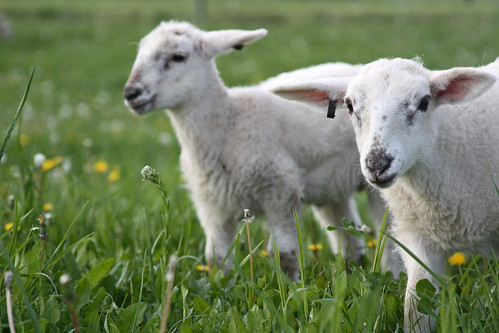
INTERESTING FACTS ABOUT SHEEP:

1. Female sheep are called ewes, baby sheep are called lambs, and male sheep are called rams (they have prominent horns on their head). A group of sheep is called a flock.

2. Sheep are defenseless against predators like coyotes and wild dogs, as they are timid, nervous, and easily frightened.

3. Though the name sheep can be used for over 200 distinct species, its everyday usage mostly refers to Ovis Aries.

4. Sheep are ruminants, with four chambers in their stomach. The first chamber is used to store quickly digested food. It can be brought back into their mouths for chewing again, before it is fully digested. Nearly one-third of sheep’s life is spent ruminating.

5. Sheep see in color. An average sheep possesses a field vision ranging to 270 degrees. However, the amount of wool on their face can have an impact on their visual field.

14 December, 2011

BRAIN

Jell-O hooked up to an electroencephalograph (EEG) can display readings similar to human brain function.

The Jell-O can pick up misleading signals that prevent the acquisition of a proper flatline reading. These signals can be things such as electrical circuits in the room, an IV drip, or a phone ringing! 

OSTRICH

The average adult male ostrich, the world’s largest living bird, weighs up to 345 pounds.

KICK BOXING

Kickboxing is an effective way for loosing some extra flab and weight. By combining both Cardiovascular kickboxing and aerobic kickboxing and consistently following the routine people can achieve great results in less time. The craze of weight loss is found more in women and various fitness centers have taken a note of it and have introduced kickboxing in gyms

"I'm A PC" Program by MICROSOFT

Microsofts "I'm a PC" Ads were created on a Mac!
This campaign was a response to the highly successful Apple campaign that featured Justin Long and John Hodgman that (favorably) compared Macs to PCs. However, in a struck of irony, clever internet users figured out that the campaign had actually been created in Macs!

What they did is they looked at the 'metadata' or information that is embedded in the media files. When they looked into this metadata, they found that the files had been created on Macs using Adobe Creative Suite 3.

The explanation is quite simple; advertising is still a Mac dominated industry, and it makes sense that whatever agency Microsoft employed would use Macs. However, that did not stop Microsoft from scrubbing all metadata from those files completely

11 December, 2011

HUMAN CHROMOSOMES

About 1 in 180 babies is born with a chromosome abnormality. The most common is Down syndrome, followed by Fragile-X syndrome. Collectively, the next most common are the syndromes of chromosome 18.

HUMAN DNA

Only about 3% of the DNA actually codes for genes; the rest is often called "non-coding DNA" because its function is unknown.

HUMAN DNA

If the total DNA in one person were laid in a straight line, it would stretch to the sun and back over 30 times (it’s 93 million miles from here to the sun).